
Automotive Paint Correction & Polishing: A Buying Guide to the Best Car Polish, Buffers & Compounds
The Short Version
The best car polish depends on paint condition: a cutting compound (BAXT Solo Extreme or Premium Cut 3000) removes swirls, oxidation and scratches, a fine finishing polish (BAXT MicroCut 5000) removes holograms and builds gloss, a one-step polish (BAXT Solo 1000) suits light correction and maintenance detailing.
Black cars and other dark colours show swirl marks and holograms more than any other paint colour so you should always finish with a fine anti-hologram polish on a soft pad, never stop at the cutting stage.
A dual-action (DA) polisher is the safer default for most bodyshop and detailing correction work; a rotary polisher cuts faster but carries a higher risk of burning through clear coat without experience.
Chrome, aluminium and other bare metal trim need a dedicated metal polish (Autosol Metal Polish or Autosol Chrome Polish), not a paint correction compound.
BAXT’s polishing system (Solo Extreme, Premium Cut 3000, Solo 1000, MicroCut 5000, M100) gives bodyshops a single, DTC-supplied compound-to-finish system rather than mixing brands panel to panel.
Bodyshops running continuous paint correction volume reduce downtime and stockouts by moving polish, pads and consumables onto a DTC Vendor Managed Inventory (VMI) programme.
What Is Automotive Paint Correction?
Paint correction is the process of removing surface defects such as swirl marks, oxidation, water spotting, light scratches and sanding marks, from a vehicle’s clear coat using a staged combination of automotive polishing compounds, polishes and machine buffing, without repainting the panel. It sits between bodyshop refinishing and detailing, and it’s the step that determines whether a repaired or resprayed panel matches the surrounding paintwork under direct light.
This guide is written for bodyshop technicians, detailers and procurement teams sourcing automotive polishing products. We will guide you through which compound and polish to use at each stage, which buffer or polisher machine suits the job, how to handle chrome and metal trim correctly, and how to keep a bodyshop stocked with the consumables paint correction burns through on every job.
The Paint Correction Process: Compound, Polish, Finish
Paint correction is a staged process, and skipping a stage or using the wrong pad for the compound is the most common cause of a poor result. Each stage uses a coarser-to-finer abrasive, in the same way abrasive grit progresses from coarse to fine in bodywork sanding.
| Stage | Purpose | Product Type | Typical Pad |
| 1. Cutting / compounding | Remove sanding marks, oxidation, deep swirls & scratches | Heavy cutting compound (BAXT Solo Extreme, Premium Cut 3000) | Wool or firm cutting foam |
| 2. Polishing | Refine the finish left by the compound, remove haze | Medium polish | Medium foam polishing pad |
| 3. Finishing | Remove holograms & fine marring, maximise gloss | Fine anti-hologram polish (BAXT MicroCut 5000) | Soft foam or microfibre finishing pad |
For lighter correction or maintenance work (a franchise bodyshop turning cars around quickly, or a pre-delivery inspection polish) a one-step product such as BAXT Solo 1000 (polish) or BAXT Solo Extreme (compound) combines cutting and finishing into a single pass, trading a small amount of ultimate finish quality for speed.
Choosing the Best Car Polish & Compound for the Job
‘Best car polish’ isn’t a single product, it’s whichever product matches the paint condition in front of you. Use the table below to match the defect to the right stage of the BAXT polishing range.
| Product | Type | Best For |
| BAXT Solo Extreme | One-step cutting compound | Heavy correction on oxidised or neglected paint; single-stage workflows |
| BAXT Premium Cut 3000 | Cutting / rubbing compound | Removing P1500–P3000 sanding marks and deep swirls; moderate correction |
| BAXT Solo 1000 | One-step polish | Light correction & maintenance detailing; fast-turnaround bodyshops |
| BAXT MicroCut 5000 | Anti-hologram finishing polish | Final stage — swirl-free, high-gloss finish, especially on black & dark colours |
| BAXT M100 | Gelcoat & marine compound | GRP/gelcoat surfaces, marine and motorsport composite bodywork |
| BAXT CarbonFinish | Composite finishing compound | Exposed carbon fibre and composite panels |
Best Car Polish for Black Cars
Black and other dark, low-metallic colours show swirl marks and holograms far more readily than lighter or heavily metallic paint, simply because of how directly light reflects off a dark, glossy surface. Every micro-scratch becomes visible under sun or workshop lighting. On black cars:
- Only use a cutting compound (Premium Cut 3000 or Solo Extreme) where genuine defects like scratches, oxidation and deep swirls, are present; don’t cut paint that doesn’t need it.
- Always finish with a fine anti-hologram polish such as BAXT MicroCut 5000 on a soft foam or microfibre finishing pad. Stopping at the cutting stage is the single biggest cause of visible holograms on black cars.
- Inspect the panel under direct or raking light (not just workshop overheads) before calling the job finished. Swirl marks that are invisible under diffuse light show up immediately in sunlight.
- Keep separate pads for cutting and finishing stages; a compound-contaminated finishing pad will reintroduce the marks you just removed.
Wool, Foam or Microfibre? Choosing the Right Pad
Pad choice affects the result as much as the compound itself. Match the pad material to the stage and machine type, not just to whatever is already fitted.
| Pad Type | Cut Level | Best Paired With | Notes |
| Wool / lambswool (BAXT W6) | Most aggressive | Cutting compound, rotary machines | Fastest correction; highest risk of marring/heat if misused |
| Firm foam (cutting) | Medium-high | Cutting or medium compound, DA machines | General-purpose correction pad for most DA work |
| Soft foam finishing (BAXT SP1) | Low | Fine finishing polish (MicroCut 5000) | Swirl-free finishing stage, ideal on dark colours |
| Microfibre pad | Medium-high, fast | One-step compounds | Rapid correction per pass; runs cooler than wool |
For teams already specified on 3M Finesse-it pads or similar, the same staged logic applies. Match pad aggressiveness to compound aggressiveness, and never share a pad across cutting and finishing stages.
Best Car Buffer & Polisher Machine: DA vs Rotary
The right buffer or polisher depends on operator experience and the amount of correction required, not just headline power.
| Machine Type | How It Works | Risk Level | Best For |
| Dual-action (DA / random orbital) | Spins and oscillates simultaneously | Low — self-limiting, hard to burn through | Most bodyshop & detailing correction work; safer for less experienced operators |
| Rotary | Direct spin, no oscillation | Higher — heat builds quickly if left in one spot | Experienced operators; heavy correction with wool pads; fastest cut |
| Forced-rotation long-throw DA | Larger orbit, forced rotation | Low-moderate | Faster correction than a standard DA while remaining safer than a rotary |
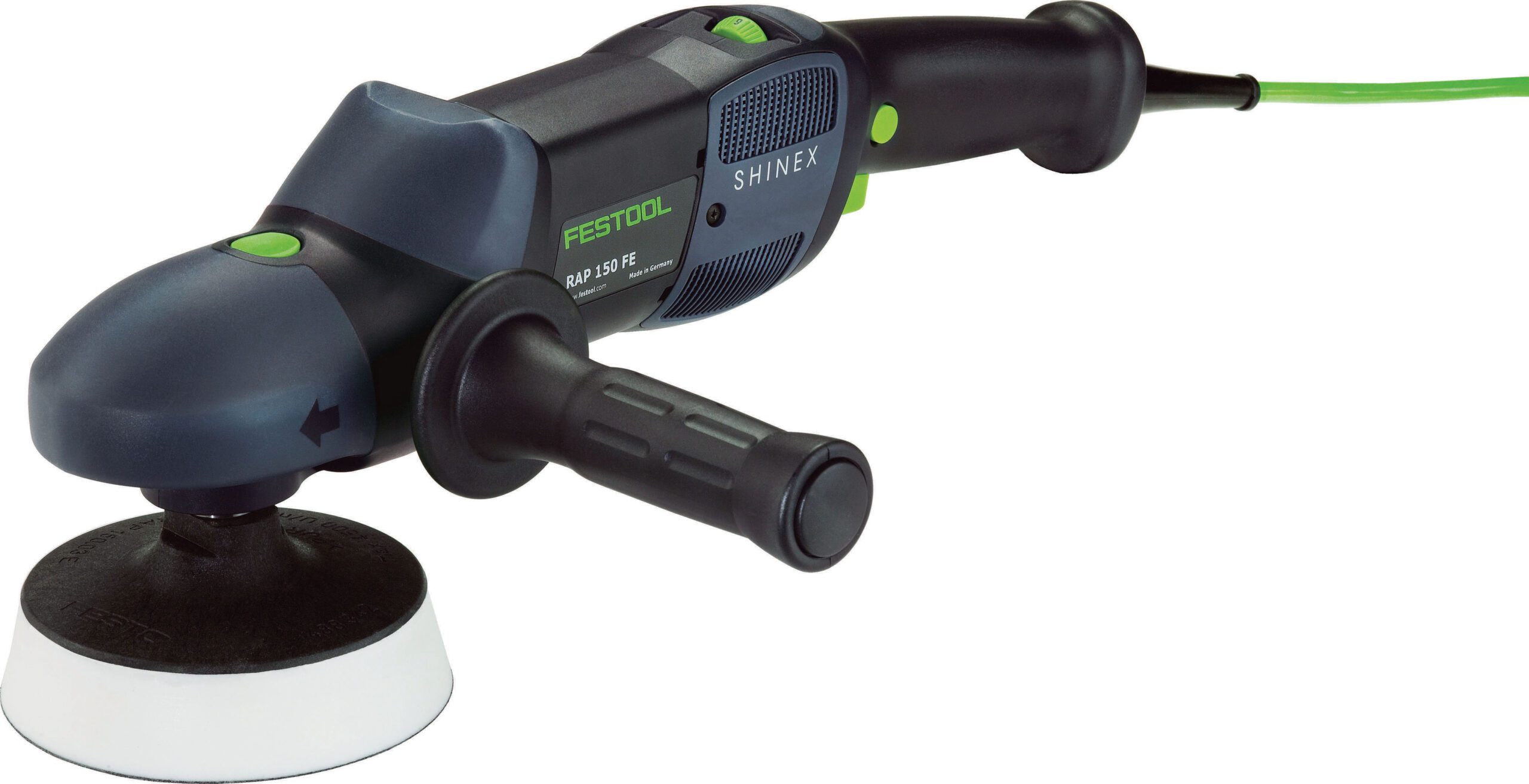
For full model-by-model recommendations and DTC’s current best-selling polisher machines, see DTC’s Electric Polishers Buying Guide, which reviews options across Rupes, Festool and Makita in detail. This guide focuses on compound, pad and consumables selection rather than duplicating those machine reviews.
Best Products for Polishing Car Chrome and Metal Surfaces
Chrome bumpers and trim, exhaust tips, alloy wheels, and other bare metal surfaces are a different substrate to painted clear coat, and need a dedicated metal polish rather than an automotive paint compound. The abrasive grade and chemistry in a paint compound is formulated for clear coat, not bare or lacquered metal.
- Autosol Metal Polish: the standard choice for chrome, aluminium, stainless steel, brass and copper trim; removes oxidation, corrosion and staining and leaves a protective finish.
- Autosol Chrome Polish (750ml tin): the same formulation in a larger format for bodyshops and workshops polishing chrome in volume.
- Apply with a soft cloth or microfibre pad by hand or on a low-speed polisher, working in straight lines rather than circles on brightwork for the most even finish.
- Do not use metal polish on lacquered chrome as the abrasive will cut through the protective lacquer layer. Lacquered trim should be treated as painted clear coat instead.
BAXT: The Recommended Polishing System for Bodyshops
BAXT is DTC’s exclusive UK-distributed brand for finishing and refinishing consumables, and its polishing range is built specifically for automotive paint correction. Compound, polish and pads engineered to work as a system rather than as standalone products sourced from different brands.
| Product | Role in the System |
| BAXT Solo Extreme | One-step heavy cutting compound for oxidised or neglected paint |
| BAXT Premium Cut 3000 | Cutting/rubbing compound for sanding marks & deep swirls |
| BAXT Solo 1000 | One-step polish for light correction & maintenance detailing |
| BAXT MicroCut 5000 | Anti-hologram finishing polish for the final gloss stage |
| BAXT W6 Lambswool Head | Double-sided wool polishing head for the cutting stage |
| BAXT SP1 Finishing Pads | Soft finishing pads for the polish/finish stage |
| BAXT M100 / CarbonFinish | Specialist compounds for gelcoat, marine & composite surfaces |
Positioning: BAXT vs. the Established Brands
For bodyshops currently specified on 3M or Farecla, the comparison points that matter are cut rate, dust/sling behaviour on the panel, pad compatibility, and finish clarity at the final stage, not just brand recognition. BAXT compounds are formulated to match the performance of those established brands while typically costing less per panel, which is why bodyshops running high correction volume increasingly move to BAXT as their default system rather than carrying multiple compound brands across the workshop.
Consumables Supply: VMI for Bodyshops
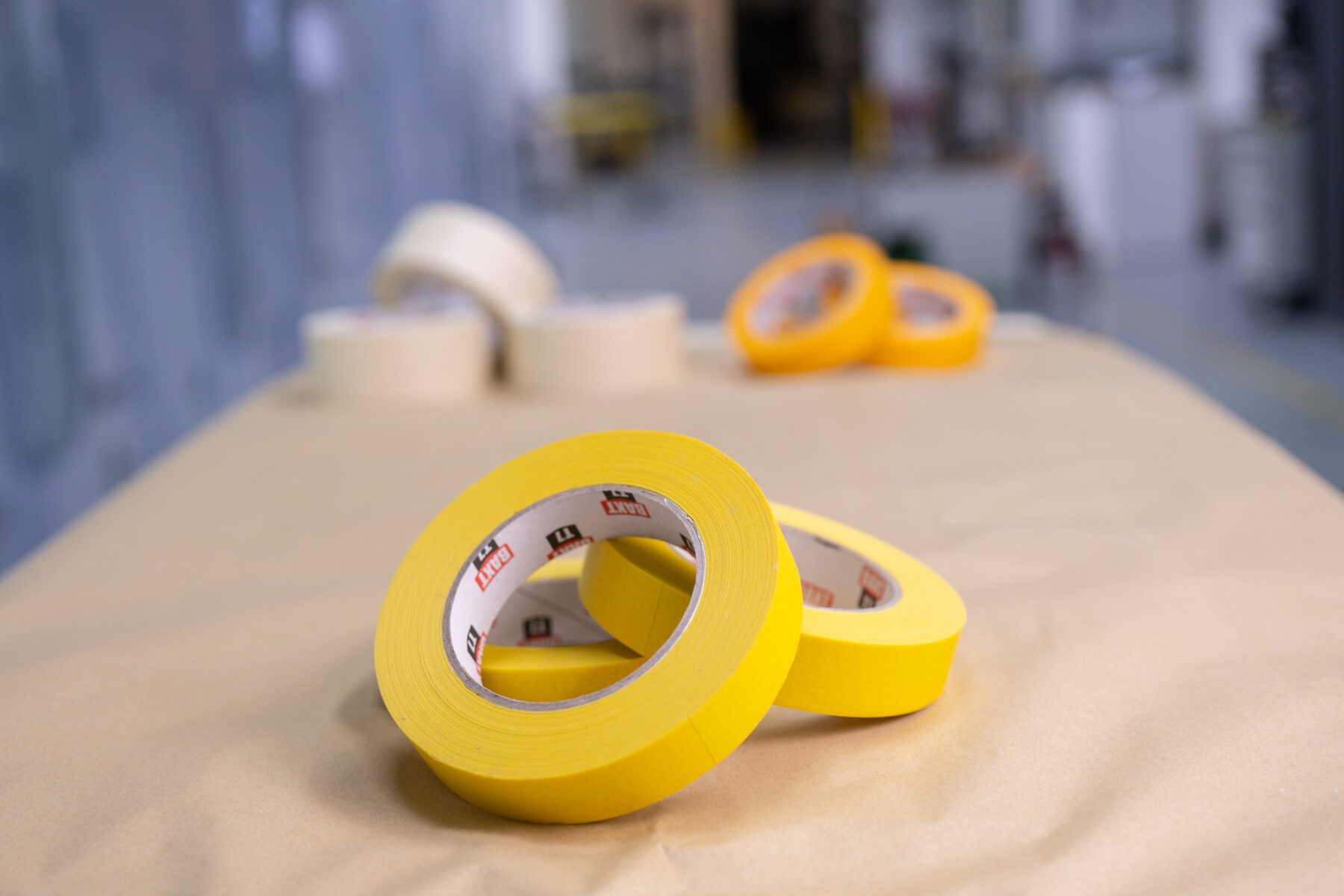
Polishing compound, pads, microfibre cloths, masking tape and PPE are used on almost every job that passes through a bodyshop or detailing bay. Running out of a single consumable mid-job stalls that bay until a replacement is sourced, which is why an increasing number of bodyshops move paint correction consumables onto a Vendor Managed Inventory (VMI) arrangement rather than reactive ordering.
How VMI Works for Bodyshop Consumables
Under a VMI model, stock levels for an agreed list of consumables such as compounds, pads, cloths, masking and PPE, are monitored continuously and replenished against pre-defined minimum and maximum levels, rather than reordered manually when a bay runs low. DTC’s VMI programme combines on-site stock systems, real-time usage data through the DTC HUB platform, and ongoing review to keep those levels aligned with actual job volume.
| Supply Model | How It Works | Best Suited To |
| Reactive ordering | Stock is checked manually and ordered when it runs low | Low-volume or occasional detailing work |
| Standing/scheduled orders | Fixed quantities delivered on a set schedule regardless of actual usage | Predictable, stable consumption |
| Vendor Managed Inventory (VMI) | Supplier monitors usage and replenishes to agreed min/max levels | Bodyshops & detailing operations with continuous, variable consumable demand |
For multi-bay bodyshops in particular, VMI removes the admin overhead of tracking compound, pad and cloth stock across every bay individually, while giving managers full visibility of usage and spend through a single platform.
Buying Guide Checklist: What to Look for Before You Order
- Assess the paint condition first and don’t default to a heavy cutting compound if a one-step polish will do the job faster and safer.
- Match pad aggressiveness to compound aggressiveness, and keep cutting and finishing pads strictly separate.
- For dark colours, budget time for a dedicated finishing pass with a fine anti-hologram polish — don’t stop at the cutting stage.
- Choose a DA polisher as the default machine unless the operator is experienced with rotary correction.
- Use a dedicated metal polish (not a paint compound) on chrome, aluminium and other bare metal trim, and confirm whether trim is lacquered before applying abrasive polish.
- Standardise on one compound/polish system (e.g. BAXT) across the workshop rather than mixing brands, to keep pad and compound compatibility consistent.
- Assess consumption volume and variability: high, continuous consumable demand across multiple bays is the strongest signal that a VMI programme will outperform reactive ordering.
Summary Comparison Chart
| Need | Recommended Product / Approach | Why |
| Heavy correction / oxidised paint | BAXT Solo Extreme | One-step heavy cutting compound |
| Sanding marks & deep swirls | BAXT Premium Cut 3000 | Purpose-built cutting/rubbing compound |
| Light correction & maintenance | BAXT Solo 1000 | One-step polish, fast-turnaround friendly |
| Final gloss, swirl/hologram removal | BAXT MicroCut 5000 | Anti-hologram finishing polish |
| Black / dark paint finishing | MicroCut 5000 + soft foam pad | Dark colours show holograms most; needs dedicated finishing pass |
| Gelcoat / composite bodywork | BAXT M100 / CarbonFinish | Formulated for GRP & exposed composite surfaces |
| Most bodyshop correction work | DA (dual-action) polisher | Low burn-through risk, forgiving for most operators |
| Heavy correction by experienced operators | Rotary polisher | Fastest cut, highest skill requirement |
| Chrome, alloy & bare metal trim | Autosol Metal / Chrome Polish | Dedicated metal abrasive, not a paint compound |
| Continuous, multi-bay consumable demand | DTC VMI Solutions | Removes stockout risk, full usage visibility via DTC HUB |
Why do bodyshops use Vendor Managed Inventory (VMI) for polishing consumables?
Why do bodyshops use Vendor Managed Inventory (VMI) for polishing consumables?
Polishing compounds, pads, microfibre cloths and masking consumables are used on almost every job that passes through a bodyshop, so running out mid-job stalls a bay and delays turnaround. VMI shifts responsibility for monitoring and replenishing these consumables to the supplier, using agreed minimum and maximum stock levels and real usage data, so bodyshops keep a full bench of correction consumables without carrying excess stock or placing manual reorders.
Is BAXT as good as 3M or Farecla for automotive polishing compounds?
Is BAXT as good as 3M or Farecla for automotive polishing compounds?
BAXT’s polishing range (Solo Extreme, Premium Cut 3000, Solo 1000, MicroCut 5000) is formulated specifically for automotive paint correction and is used across bodyshop and detailing production environments. The comparison points that matter are cut rate, dust/sling behaviour, pad compatibility and finish clarity. BAXT compounds are built to match the performance of established brands such as 3M and Farecla at a lower cost per panel, which is why bodyshops with high correction volume increasingly specify BAXT as their default system rather than mixing brands.
What's the difference between a rubbing compound and a polish?
What's the difference between a rubbing compound and a polish?
A compound (or cutting/rubbing compound) contains coarser abrasives designed to remove material — sanding marks, oxidation, deep swirls and scratches. A polish contains finer abrasives designed to refine the finish left by the compound, removing haze and micro-marring to build gloss. A one-step product, such as BAXT Solo 1000 or Solo Extreme, combines both functions into a single pass for lighter correction work.
What are the best products for polishing car chrome and metal surfaces?
What are the best products for polishing car chrome and metal surfaces?
Chrome, aluminium, stainless steel and other bare metal trim need a dedicated metal polish rather than a paint correction compound, since the abrasive and chemistry are formulated differently. Autosol Metal Polish and Autosol Chrome Polish are the standard choice for chrome, aluminium, stainless steel, brass and copper, removing oxidation, corrosion and staining while leaving a protective finish. Lacquered chrome should not be cut with metal polish, as this can strip the protective lacquer layer.
What is the best car buffer machine?
What is the best car buffer machine?
For most bodyshop and detailing correction work, a dual-action (DA) polisher is the safer and more forgiving choice, since its oscillating action carries a much lower risk of burning through clear coat than a rotary machine. Rotary polishers cut faster and are preferred by experienced operators for heavy correction, but require more skill to use safely. A forced-rotation long-throw DA offers a middle ground: faster correction than a standard DA while remaining safer than a rotary.
What is the best car polish for black cars?
What is the best car polish for black cars?
Black and other dark colours show swirl marks and holograms more than any other paint colour because of how light reflects off a dark, glossy surface. On black cars, always complete the correction with a dedicated fine finishing polish such as BAXT MicroCut 5000 applied on a soft foam or microfibre finishing pad, and inspect the panel under direct or raking light before finishing. A cutting compound alone will leave visible micro-marring on black paint.
What is the best car polish?
What is the best car polish?
There isn’t a single ‘best’ car polish. The right product depends on paint condition. For heavy correction (oxidation, deep swirls, scratches), use a cutting compound such as BAXT Solo Extreme or Premium Cut 3000. For light maintenance and one-step correction, use a one-step polish such as BAXT Solo 1000. Always finish with a fine anti-hologram polish such as BAXT MicroCut 5000 to remove any marks left by the cutting stage and maximise gloss.