


THE SCALE PROBLEM
Why the composites industry’s next challenge isn’t innovation — it’s industrialisation
For decades, the composites industry has been extraordinarily good at one thing: proving what its materials can do. Lighter aircraft. Stronger hulls. More efficient wind turbines. Faster racing cars. The evidence is everywhere, and it is compelling. The argument for composites has long since been won.
So why, at JEC World 2026, the industry’s largest annual gathering, was the dominant conversation not about materials at all?The answer is simple, and rather uncomfortable. The composites industry has a scale problem. Not an innovation problem. Not a materials problem. A manufacturing problem. And it is one that no amount of new resin chemistry or fibre technology will solve on its own.
“The industry no longer faces a materials innovation challenge. It faces a manufacturing scale challenge.”
From concept to consistent
Walk the floor of any major composites event and the product innovation is genuinely impressive. New thermoplastic systems. Bio-based resins inching closer to industrial viability. AI-assisted design tools that compress months of engineering work into days. The materials science continues to advance at pace.
But innovation in a laboratory is not the same as production in a factory. The gap between the two has become one of the most pressing issues the industry now faces.
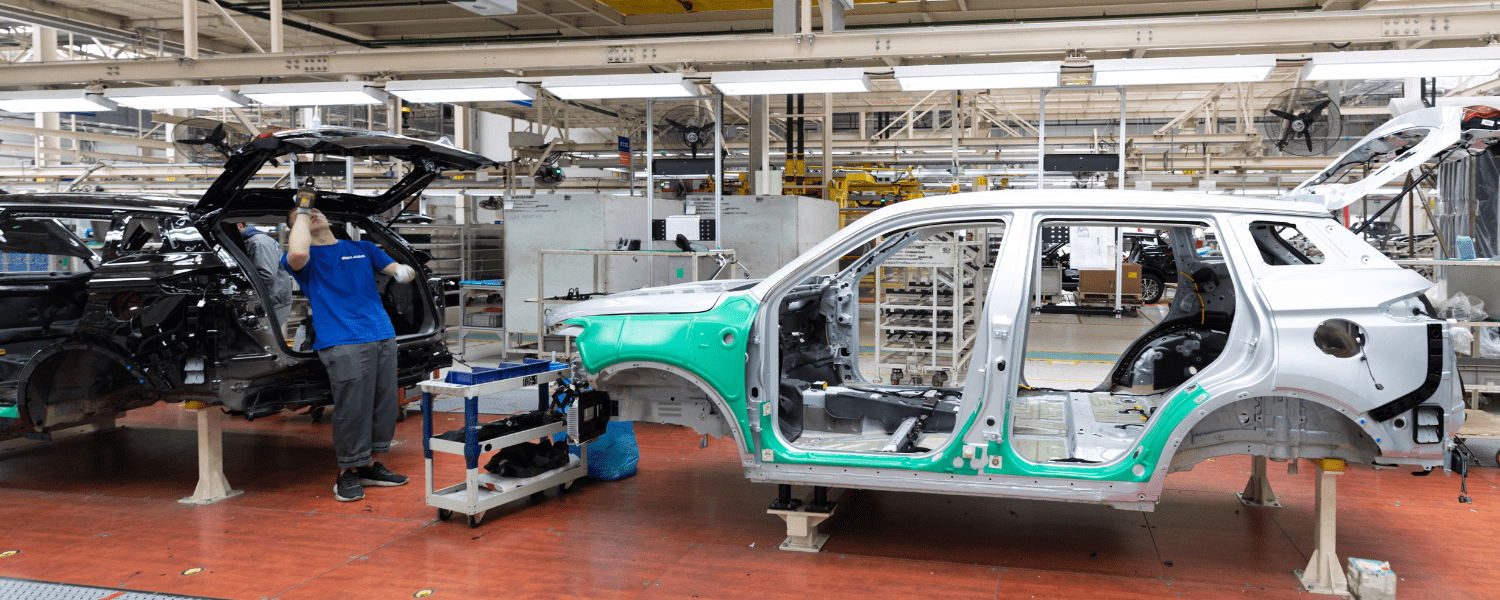
Processes that work beautifully in controlled prototype environments, where skilled engineers manage every variable, can become extraordinarily difficult to replicate when they need to run at volume, across shifts, in factories producing hundreds or thousands of identical components to consistent quality standards.
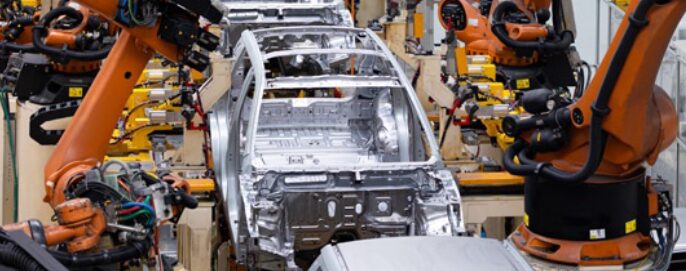
This is not a theoretical concern. Aerospace is one of the clearest examples. The next generation of commercial single-aisle aircraft will require composite production rates that the industry has never come close to sustaining. Targets discussed at JEC World and SAMPE 2026 run to eighty or a hundred aircraft per month per manufacturer. Current composite manufacturing infrastructure is not remotely close to that. The gap is not a matter of fine-tuning. It is a fundamental shift in how production systems need to be designed, staffed, and managed.
The industrialisation barrier
What makes scaling composites so difficult? Several things, and they compound each other.
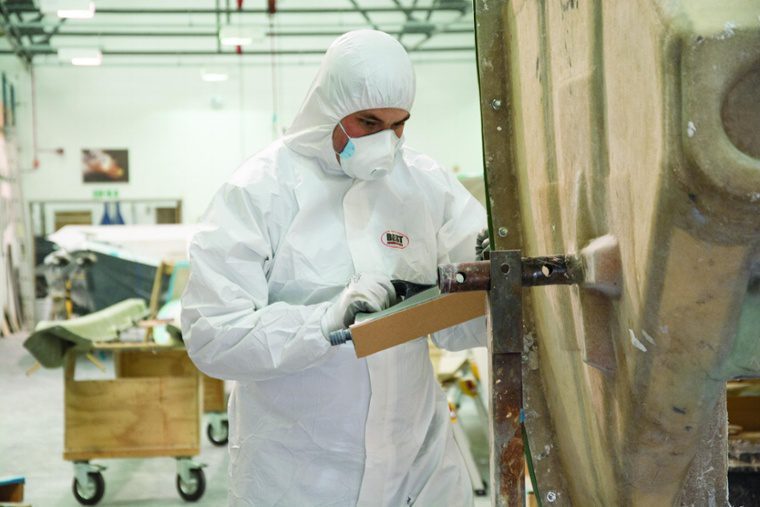
First, composite manufacturing has historically been labour-intensive and highly dependent on skilled operators. Hand layup, manual inspection, process-driven decision-making: these are craft skills. They produce excellent results. They do not, by their nature, scale predictably. When a business doubles headcount, it does not necessarily double throughput. It often increases variability.
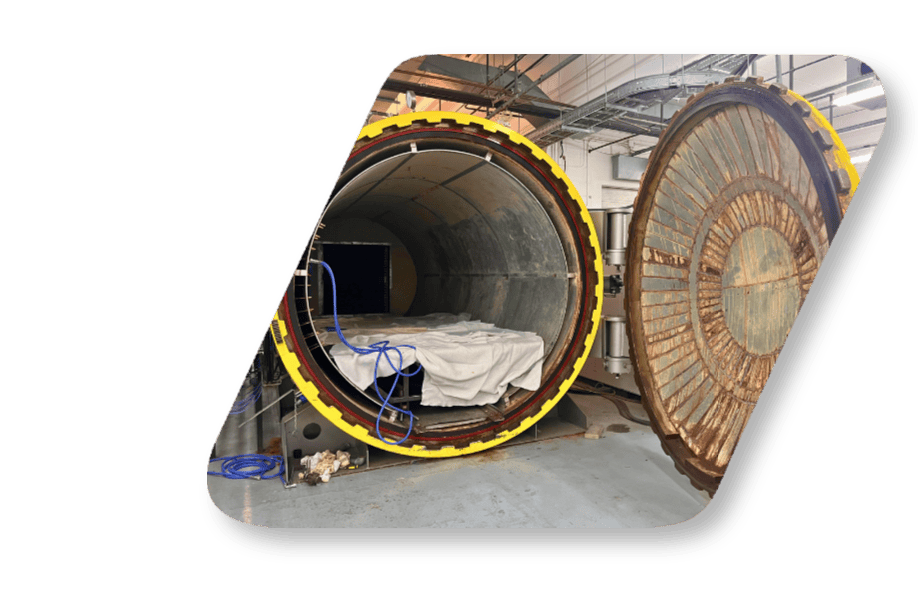
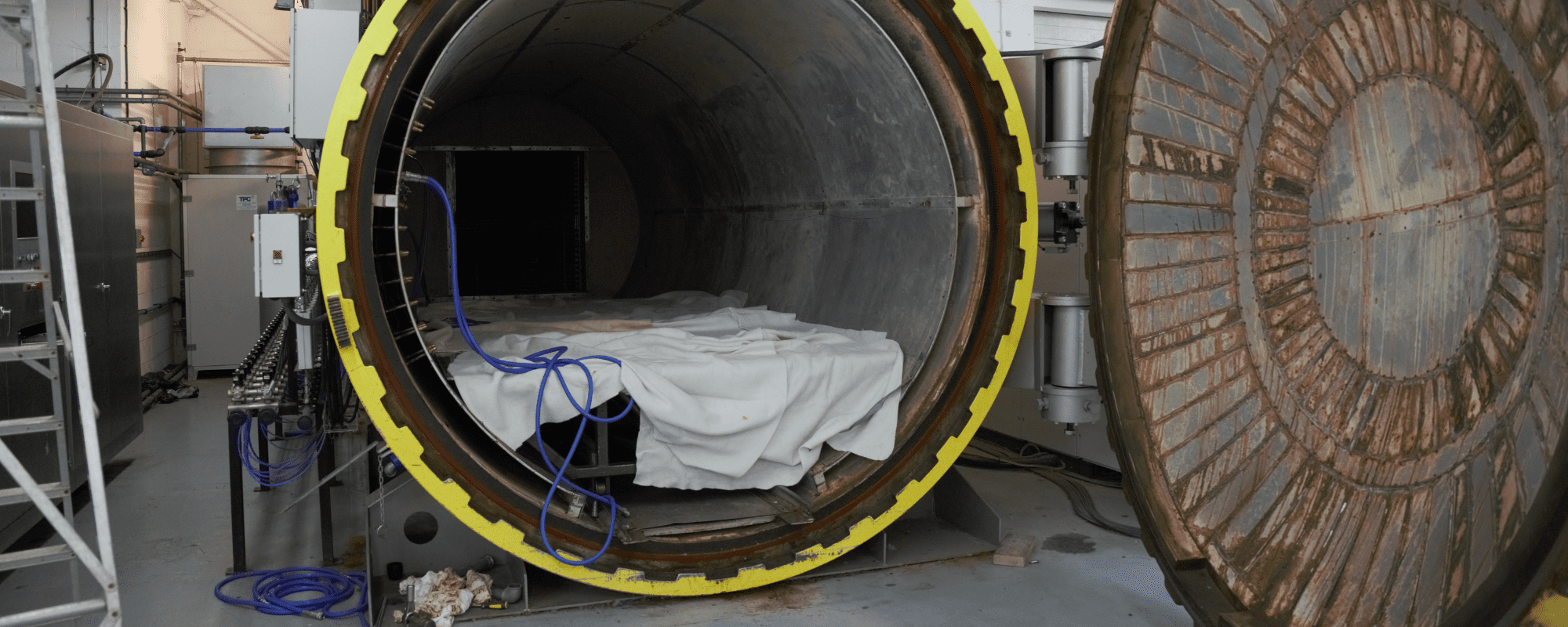
Second, composite processes are sensitive. Resin infusion, autoclave curing, automated fibre placement: each involves multiple interacting variables. Temperature. Humidity. Resin viscosity. Fibre orientation. Cure cycle. In a prototype environment, engineers can adjust and compensate. In a production environment running round the clock, variation in any one of these factors can cascade into defect rates, rework, and waste that make the economics unworkable.
Third, the tooling and equipment investment required to run closed-mould processes at genuine industrial volume is substantial. Resin Transfer Moulding and resin infusion, which are increasingly central to scalable composite manufacturing, require precision tooling and controlled process environments. The capital commitment is significant. Lead times for tooling alone can stretch to months. For smaller manufacturers moving up the volume curve, this is a genuine barrier.
Data as infrastructure
One of the clearer themes emerging from the industry’s scaling efforts is the role of data. Manufacturers making the transition to higher-volume production are investing heavily in process monitoring and digital traceability. Not as a compliance exercise, but as a practical necessity.
When you are running at scale, you cannot rely on individual operator knowledge to maintain process consistency. You need systems that capture what is happening in real time, flag deviations before they become defects, and create the kind of audit trail that allows you to understand and fix problems systematically rather than intuitively.
This is a significant cultural shift for an industry that has often operated on deep craft knowledge. The knowledge does not disappear; it gets encoded into systems, process standards, and training. But the transition requires investment, discipline, and a willingness to formalise what was previously informal.
What this means for the supply chain
The industrialisation challenge does not sit only with the large manufacturers. It runs the full length of the supply chain.
As production volumes rise, the demand placed on consumable suppliers, tooling manufacturers, and material distributors changes fundamentally. Consistency becomes more important than novelty. Lead time reliability matters more than marginal cost saving. The supplier that can guarantee product performance within tight tolerances, delivered predictably and supported with technical knowledge, becomes a strategic asset rather than simply a vendor.
For UK composite manufacturers, particularly the SMEs that form the backbone of the sector, the scaling challenge is particularly acute. The capital constraints are real. The skills base, already stretched, will not absorb rapid growth without deliberate investment in training and retention. And the pressure from larger primes to demonstrate manufacturing consistency, traceability, and quality assurance is only increasing.
But this is also where opportunity sits. The manufacturers who solve their own scaling challenges, who build production systems that are genuinely repeatable, data-driven, and resilient to variation, will be the ones who win the contracts that the next decade of aerospace, energy, and advanced mobility will require.
“The manufacturers who solve their own scaling challenges will be the ones who win the contracts the next decade requires.”
The work that doesn't make headlines
There is a quiet irony in the composites industry’s current moment. The breakthroughs that attract investment, press coverage, and industry excitement are almost always materials innovations. New fibres. New resins. New processing chemistries. These are genuinely important, and the research deserves recognition.
But the work that will actually unlock the industry’s potential is less glamorous. It is the painstaking process of taking an innovation that works and building the systems, controls, training, and infrastructure that make it work reliably, at volume, day after day.
That is the industrialisation of composites, and it is where the industry’s next decade will be won or lost.