

Vendor Managed Inventory (VMI) & Stock Control
VMI is a key tool in maintaining a reliable supply chain and always having adequate stock on hand, an essential component of running a successful business in any production focused engineering environment. It’s critical that workers have access to the materials and tools they require to get the job done on time.
Even the smallest chink in the supply chain’s armour can create a snowball of delays that can put a project way behind schedule.
There are many different methods of dealing with consumable stock control – and inventories as a whole. Some are reasonably simple, others require a little bit more forethought and planning.
One of the most efficient and therefore profitable ways of controlling stock levels is Vendor Managed Inventory, or VMI.
Many people have heard of VMI, but few actually understand the principles behind it. Here we explore an overview as to what it is, why you’d need it, and if it’s right for your business.
What Is Vendor Managed Inventory?
VMI is a very collaborative way to approach order fulfilment and supply chain management. Suppliers and customers work hand in hand with one another to improve the order processing efficiencies for the benefit of both businesses.
The end result of a properly executed VMI strategy is a streamlined replenishment process that improves reliability and increases profit.
By using a VMI system the supplier usually takes on full responsibility for the customer’s inventory management. The supplier works to to maintain an agreed minimum stock level at all times.
Because the stock levels of the customer are being managed by the supplier a process for dealing with unsold or unused stock is usually established when the contract is first signed. This usually works in one of two ways:
- The supplier agrees to buy back any unsold stock from the customer if it is not selling as well as expected or is no longer needed.
- The supplier maintains ownership of all stock until it is used or sold by the customer, known as Consignment.
How Does Vendor Managed Inventory Work?
This is a grossly oversimplified way of looking at VMI, the process varies and is much more intricate than can be summarised in this article – but these are the general principles.
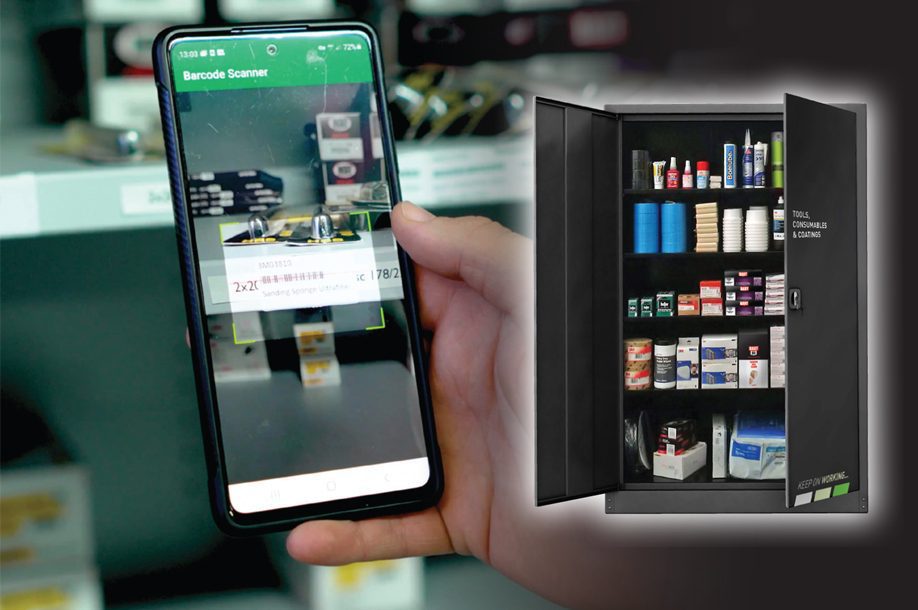
The VMI process all revolves around something that is known as a “Product Activity Report”. Within this report, there is information about the customer’s current sales, transfers, and stock levels which can provide the supplier (or the VMI specialist) all the data they need to begin their analysis.
This analysis is almost always done by sophisticated software that looks at previous sales trends and current forecasts to recommend replenishment quantities. These reports can either be done on a daily or a weekly basis (but ideally both).
The supplier and the customer then approve any orders and the stock replenishment is actioned.
Why Is VMI Good For Customers?
The main upside for customers who are using a VMI system for inventory stock control is that it provides an almost unparalleled level of certainty. Without VMI, suppliers usually see a customer as a “black box”. They have no idea how much of their current stock has been used, and as such, they have no way to prepare for a potential refill order.
When a supplier can see what you’re using on a daily basis, they can suggest and prepare their own stock to keep your inventory at required levels.
Why Is VMI Good For Suppliers?
Now, this might all sound like a great idea from the customer’s point of view. You get a fully managed inventory system that is rarely going to leave you out of stock (with minimal risk) for basically free.
But the supplier is doing all the extra work here, and they are certainly taking all the extra risk, so what’s in it for them?
Well, when a customer has a functioning and satisfactory VMI system in place, they are unlikely to switch to another supplier. Setting up a VMI system is no easy task, it takes a little bit of time, effort, and money to do. You can’t just switch suppliers like you switch electricity companies – each organisation will do things slightly differently.
Providing the supplier is providing a good service, is competitively priced, and keeps the customer’s stock replenished reliably – then they have essentially earned themselves a steady and dependable customer.
Additionally, because the supplier can now see the customer’s stock levels it allows them to manage their own inventory much more effectively too. This results in efficiency savings that increase profit margins.
The end game for suppliers is to have a highly accurate amount of stock on hand to supply to customers without carrying too much stock themselves. After several years of data, the advanced VMI algorithms that are used to determine replenishment statistics and probability forecasts become highly accurate. This allows them to again only carry as much stock as they need.
How To Ensure A Successful VMI System
As we are sure all will agree , this sounds like a system that benefits everyone with little downsides for any party involved. However, it is also quite a commitment.
Providing you work with the right supplier (or VMI specialist) there is no reason why the process of transitioning to a VMI system cannot be reasonably painless, if not a little long winded at first. To give you the best chances of success, be sure to follow the following few tips.
1. Get On The Same Page
It’s highly important that both the customer and the supplier are aligned when it comes to the initial phases of the project. You need to both agree on the short term and long term plan of your relationship instead of just “seeing how it goes”. If you don’t do this there is a good chance that either the supplier or the customer will be disappointed at some point down the line and the collaboration will end, which is basically wasted time and money.
This is particularly important when you consider the supplier’s point of view. When a supplier and a customer first start a VMI partnership the supplier is getting very little benefit. They are doing all the work without having enough data to make it worth their while. Setting long-term expectations out in black and white at the start ensures a smooth and steady working relationship.
2. Decide What Information Needs To Be Shared
Before you get started on implementing a VMI system both the supplier and the customer need to come to an agreement on exactly what information is expected to be shared. Customers can be a little hesitant in some cases, especially when information is sensitive. No good supplier will expect you to give up proprietary information, but forecasts and production schedules should be included as a bare minimum.
3. Stay In Touch
In the initial phases of implementing a VMI system, there are bound to be slight errors and teething problems that inevitably occur. When these things happen, which they almost certainly will, it’s important to see them as a chance for improvement – not a chance to point the finger.
If both the customer and the supplier go into a VMI partnership with a managed expectation of mishaps happening in the initial phases, the project has a much great chance of long-term success.
In fact, the primary reason for VMI failure is a communication breakdown. Despite the aim of a flawless long-term partnership, life can get in the way. It’s important for the supplier and the customer to keep the other party up to date on current events that may affect their partnership.
The most obvious example of this is when a customer takes on a large new contract, or when a supplier takes on a large new customer. Either of these situations may result in a temporary demand increase on the respective inventories. A quick phone call to the other party will alert them to the event and will allow them to adjust to the new temporary situation until things reach a happy equilibrium again.
DTC & VMI
We are experts in establishing VMI with our customers and can demonstrate the real efficiency and financial benefits of working with us to manage your stock levels and replenishment.
Contact us now to find out more.