


What reordering really costs
1. The invoice that never arrives
There is no line on any statement for the time spent ordering consumables. It gets absorbed by whoever is closest to the problem, which in most workshops means a supervisor or a stores lead doing 20 minutes of admin because the alternative is running out of abrasive discs halfway through a Thursday shift.
None of it feels expensive on its own. Finding a part number, checking whether it is already on order, raising it, then chasing it a week later when nothing has arrived, that reads as a small irritation rather than a cost. Frequency is what does the damage. If someone handed you an annual invoice for consumables procurement admin, you would query it. Because it arrives as several hundred small interruptions instead, nobody adds it up.
The figure is usually worth counting once, even if you decide to do nothing about it. It tells you whether the problem is large enough to be worth solving.
2. It lands per line, not per order
This is the part most cost exercises miss. A purchase order covering 40 lines is not one decision. It is 40. Each line needs a part number, a quantity, and a judgement about whether there is enough on the shelf to reach the next delivery. The paperwork happens once. The thinking happens 40 times.
Buyers at larger manufacturers often place relatively few orders, because they consolidate deliberately and order in volume. That makes the order count look reassuring and hides the line count entirely. If you want a number that reflects the real workload, count lines reordered in a month rather than purchase orders raised.
The same distinction matters when you go looking for savings. Consolidating 5 orders into 1 saves you 4 lots of paperwork. Removing 15 lines from the reorder cycle altogether, because the stock levels now manage themselves, saves you 15 lots of thinking every single time.
3. Four costs of reactive reordering
Admin time is the one people reach for first, and it is the smallest of the four in most operations. The others are harder to see and considerably more expensive
Time spent finding, raising and chasing. It is spread across people whose job title is not buyer, which is exactly why it never gets measured. Use the calculator below to put a figure on yours.
Card 02. Carriage and expediting
Small top-up orders often attract a delivery charge that a consolidated order would not. Worse is the forgotten item that needs a next-day upgrade, where the shipping can cost more than the consumable itself. These charges are real, they are on your invoices, and almost nobody totals them separately.
Card 03. Stoppages
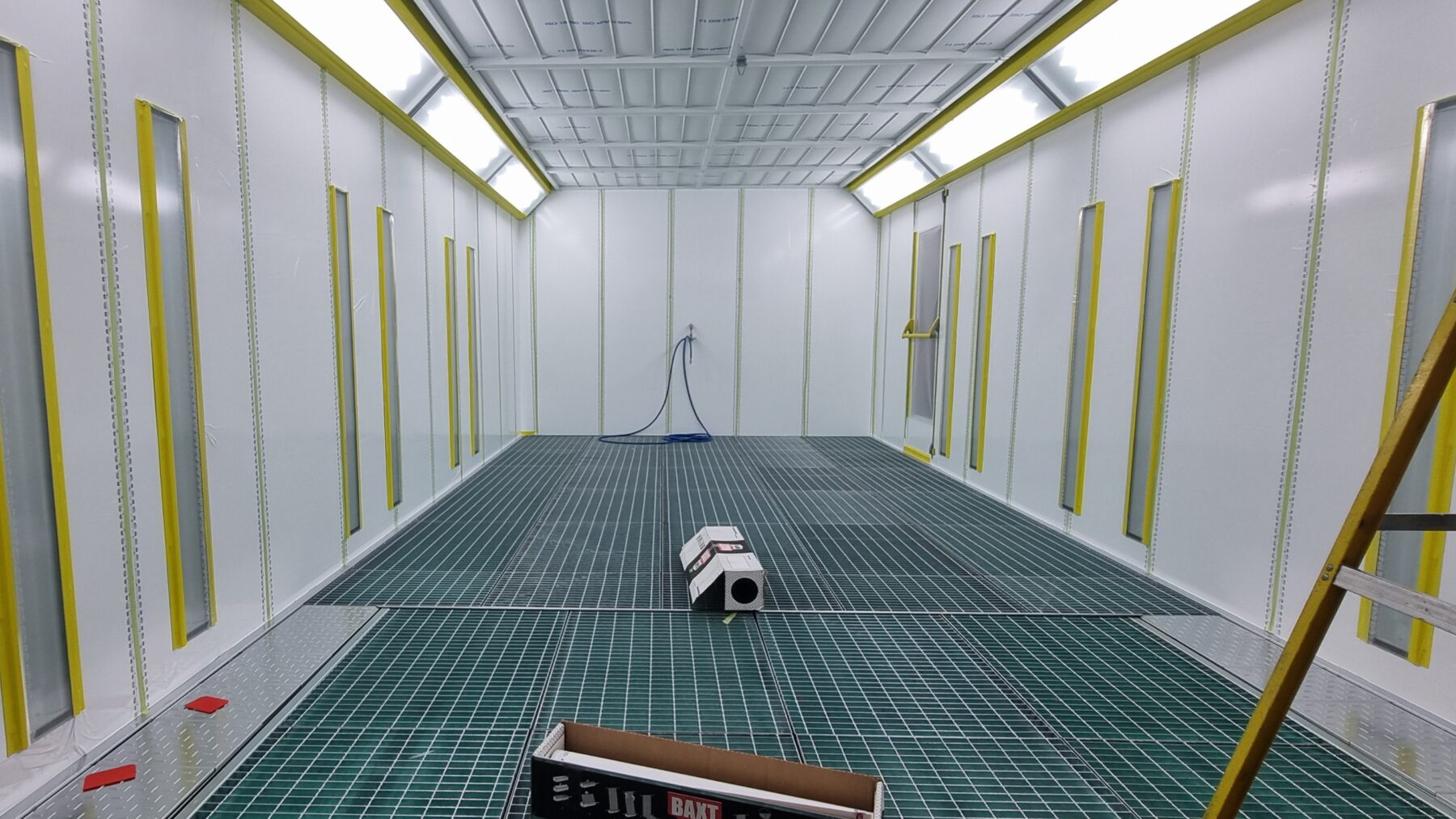
A booth standing idle for want of masking tape or a filter is the expensive one. The consumable that caused it might be worth £40. The hour of stopped finishing work, the labour standing around it and the knock-on to the schedule are worth considerably more, and the cost lands in production, not procurement, so the two rarely get connected.
Card 04. Stock that never gets used
Over-ordering to avoid the first three costs creates a fourth. Resins, hardeners, adhesives and some tapes carry shelf lives, and several need controlled storage. Buying 12 months of a resin to win a unit price break is a false economy if 3 months of it goes out of date in the drum, and it ties up cash and floor space in the meantime.
4. Why ordering less often is only half an answer
The obvious fix is to order in bigger quantities, less frequently. It works for some lines and quietly creates problems on others.
Consumption is rarely flat. A shop that gets through 4 boxes of discs a week during a long fairing job might use none the following month. Setting reorder quantities off an annual average produces stockouts in the busy weeks and dead stock in the quiet ones. The lines worth bulk buying are the ones with steady usage, long shelf life and low storage demands. Everything else needs a different approach, and treating the
whole range the same way is what causes most of the trouble.
There is also a cash question that sits outside the procurement conversation. Stock on a shelf is money that is not doing anything, and in a business with tight working capital that trade is not automatically worth making, even when the unit price is better.
Scroll the table sideways to see every column.
| Line | Usage pattern | Shelf life and storage | Suggested approach |
|---|---|---|---|
| Abrasive discs, rolls and belts | High and fairly steady week to week | Long. Store dry and flat, nothing else needed | Bulk buy against min and max levels. The clearest candidate for taking off the reorder cycle entirely |
| Gloves, coveralls and PPE consumables | Steady, tracks headcount rather than jobs | Long. Minimal storage demands | Bulk buy on an agreed call-off. Usage is predictable enough to forecast |
| Mixing cups, sticks and tack cloths | Steady, but volumes are bulky | Long. Takes up more shelf space than its value suggests | Bulk if you have the room. If not, a scheduled delivery beats a large holding |
| Masking tape and film | High during finishing work, quiet between jobs | Adhesives degrade over time. Check the data sheet | Moderate quantities on min and max. Rotate stock so the oldest goes first |
| Resins and hardeners | Project driven and spiky. Averages mislead here | Limited, and several need temperature control | Order to the job. Do not bulk buy on unit price alone |
| Adhesives and sealants | Low to moderate, often job specific | Limited. Some require cool storage | Small quantities. Check dates on receipt, not just at point of use |
| Specialist and single job items | Occasional and unpredictable | Varies | Order as needed and keep them off the reorder list entirely |
Shelf life and storage requirements vary by product and manufacturer. Check the technical data sheet before committing to a volume order, and get the expiry in writing.
5. What to do before you change anything
Switching supplier or bolting on a system without doing this first tends to move the problem rather than remove it. None of the steps below take long, and they are worth doing even if you stay exactly where you are.
- Count your lines for one month. Not orders. Lines. Most people are surprised, and the number is the basis for everything that follows.
- Find the handful that drive the activity. A small share of your lines usually accounts for most of the reordering. Those are the ones worth managing properly. The long tail can stay as it is for now.
- Work out real usage rates. Measure weekly consumption for the fast movers rather than estimating it, ideally across both a busy period and a quiet one.
- Check shelf life before you bulk buy anything. Get the expiry date and storage requirements in writing for resins, hardeners, adhesives and sealants. It changes the maths on volume pricing.
- Set minimum and maximum levels on the fast movers. A level that triggers a reorder removes the judgement call, which is the part that takes the time.
- Decide who is allowed to order. Ordering that happens in three places at once produces duplicates, missed carriage consolidation and no usable data.
- Agree a cut-off and order to it. If your supplier takes orders until 5pm for next-day delivery, one order a day placed at 4pm beats four orders placed whenever someone notices a gap.
6. Questions worth asking a supplier
These separate suppliers who will genuinely reduce your workload from those who will simply take the order
1. What is your cut-off for next-day delivery, and how often do you actually hit it?
2. Will you hold stock against our forecast, and what happens if we do not draw it down?
3. Can you consolidate lines from different categories onto one delivery?
4. Will you manage minimum and maximum levels on our site, and who does the counting?
5. What happens when we need something that is not on the agreed list
6. Which of our lines would you recommend we stop bulk buying, and why?
The last one is the most useful. A supplier who will talk you out of a larger order is telling you something about how they intend to work with you.
Cost calculator
What is reordering actually costing you?
The cost of ordering consumables never arrives as a bill. It gets absorbed by whoever is nearest. Put your own numbers in and see it as one figure.
Separate purchase orders for consumables, not lines within them
Finding the part, checking stock, raising it, chasing it
Loaded rate, not just take-home pay
Cost of reordering
£1,498
per year, in time spent placing orders
- Ordering admin
- 1.6 hours a week
- Orders raised a year
- 416
None of that time produces a part, a finish or a delivery.
8. Where we come into it
We have spent over 30 years supplying consumables into composites manufacturing and finishing, and the pattern above is one we see constantly. Most of the saving in these accounts does not come from unit price. It comes from removing lines from the reorder cycle, consolidating deliveries, and putting stock levels somewhere they get managed rather than remembered.
A supply review takes about 20 minutes. We look at what you reorder, how often, and which lines are causing the workload, then tell you what we would change. If the answer is that your current setup is working, we will say so.
DTC HUB: New Features Now Available
DTC HUB has new features — real-time order tracking, invoice downloads, full order history, and a new Limited Ordering user level. Log in to see what’s changed.
Read More