Could welding replace riveting on aircraft?
An aerospace project has welded the two halves of an 8-metre carbon fibre fuselage together, with no drilling or riveting along the seams.
How it was done
Around 40 aerospace companies and research institutes, including Airbus, DLR, GKN Fokker and Saab, built the section under Clean Aviation, the EU’s research programme for lower-emission aircraft. It is called the Multi Functional Fuselage Demonstrator (MFFD). It is 8 m long and 4 m across, made from thermoplastic carbon fibre, and in January 2025 it won the JEC Composites Innovation Award for aerospace parts.
The fuselage was built as two half shells, one upper and one lower. Each shell was fitted with most of its structure and systems before the two were closed together. One long seam was laser welded and the other ultrasonically welded. Fraunhofer IFAM in Stade automated the assembly and developed the laser welding process.
Welding replaced drilling and riveting when the shells were finished. Fraunhofer says this avoided the carbon fibre dust that drilling creates.
The aim was a lighter aircraft that costs less to build. The partners report 10% less weight, 10% lower production cost and up to 540 kg less CO2 per flight.
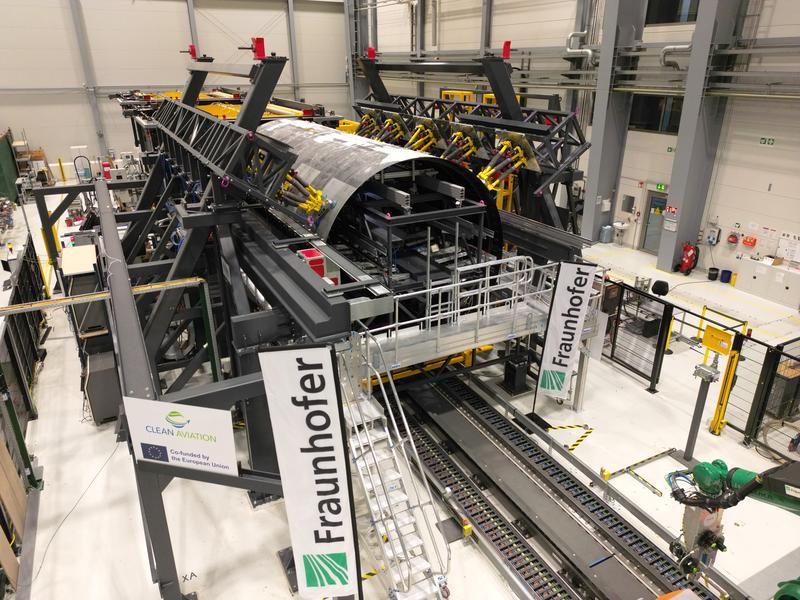
The two fuselage shells on the assembly platform in Stade. Photo © Fraunhofer IFAM
What it could mean on the shop floor
This is a demonstrator, not a production aircraft, so riveting isn’t going anywhere yet. It does show where large composite structures could be heading.
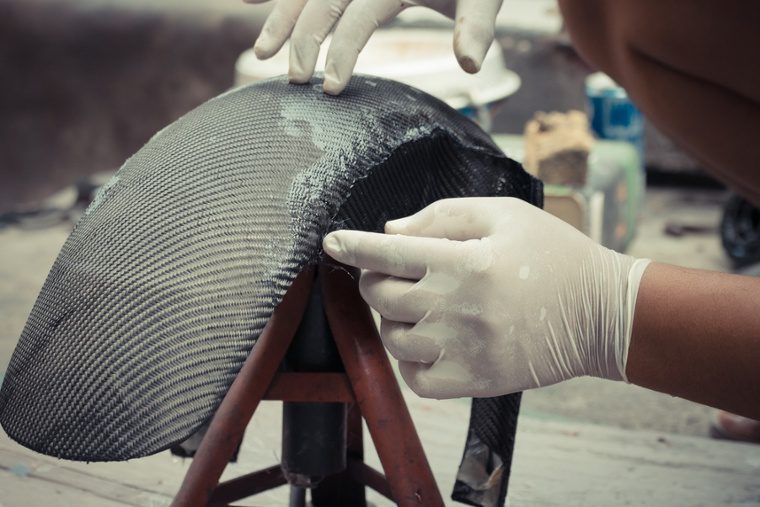
- Less drilling. Fewer holes along welded joints mean fewer fasteners and less carbon dust to extract.
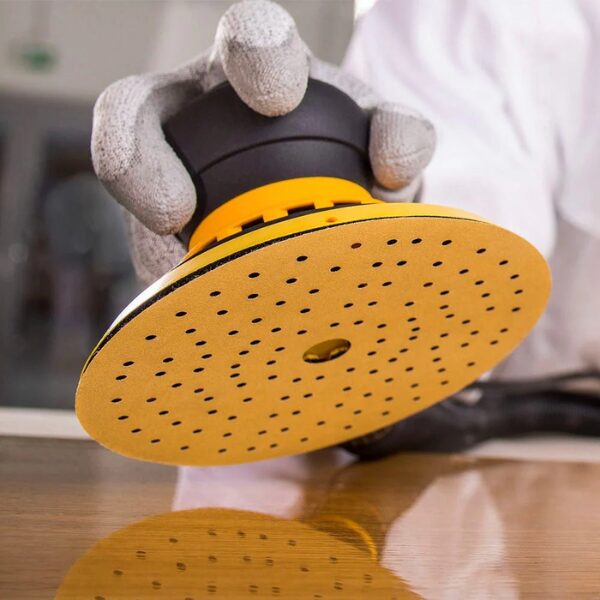
- Surface preparation becomes the critical job. A weld is only as good as the surfaces it joins, so abrading and degreasing before welding count.
- New skills. Welding and weld inspection in place of drilling and fastening.
Where it’s heading
The research team is now looking at the same processes for road vehicles and boats, as well as aircraft tail planes and hydrogen tanks. Fraunhofer plans to make the processes available for industrial use.
Read the full press release from Fraunhofer IFAM.
Working with composites?
Whether you are drilling, sanding or preparing surfaces for bonding, we can help you choose the right abrasives, PPE and dust extraction. Talk to our team.